Where will agriculture take you?

Tuesday, June 5, 2012

Wet Market Morning

The Malaysian wet market is an infamous aspect of Malaysian culture. Grocery stores are not very popular and more expensive than buying food from traditional markets. Wives often visit the markets early in the morning in order to get fresh produce and meats. Haggling for goods is a common practice and many women strive to get the best deals for their family. 

Common meat items include chicken and sea food. The poultry industry is predominant in Asia and its location next to the ocean makes seaside fishing popular. The food purchased at the wet market must be consumed quickly unless it will spoil. Most women make leftovers to last several days after purchasing meat. They visit the market several times a week. The market atmosphere was exciting but the smell was not very pleasant! If you ever visit a wet market, do not forget to watch your step. Why else would it be called a wet market?
You never know what you will find in the local wet markets! The shark was caught hours before it arrived to the market. Most meat products are sold early in the morning because the lack of refrigeration causes a short shelf life.  


Tropical fruits were abundant in the wet market. The bananas in Malaysia are about half the size of American bananas but taste even sweeter! 

More vibrant fruits! 

There is no better treat than fresh tropical pineapple. I had several pieces of pineapple during meals!

Grocery Run

The rice, seafood, chicken, oh and more rice, was great and I had many wonderful dishes. But I was ready for some American products! So when we toured a local grocery store I found myself getting some Oreos. Now if only I had a glass of ice cold milk! (Nearly all milk in Malaysia is a mixture of milk powder and water, the dairy industry is not strong and it would not be effective to import the product.)

Well, I found a golden cow in the Malasian grocery store. How was your day? 

U.S. Grains Foundation

Without the U.S. Grains Council I would not have been able to travel to Southeast Asia. The U.S. Grains Council advocacy branch is the U.S. Grains Foundation which worked with National FFA to create I-CAL. I-CAL was designed to bridge the gap between college students and the international agriculture sector by exposing students to trade, production and farming abroad. I-CAL offers future agriculturists an enhanced view of the world. The Foundation assists with funding, coordinating the program and provided expert foreign agriculturists and translators. So thank you to the U.S. Grains Foundation for the trip of a lifetime! 


At the U.S. Grains Council Malaysian headquarters for meetings and to meet with company officials. The Council celebrated its 20th anniversary in Southeast Asian during I-CAL and our group was invited to the reception.  

Malaysian Palm Oil Board

Before touring the Malaysian Palm Board I assumed palm oil was something in lotions and soaps. I was very wrong! Palm oil is a common cooking ingredient found in products ranging from baked goods to cleaning supplies. It is a versatile ingredient that is in U.S. products such as cake mix, vegetable oil and body wash. 

Malaysia is the world's leading palm oil exporter. Palm trees are grown in plantations and take 5 years to mature. The trees will produce actively for 25 years. It is a lucrative business industry with high profits. The oil is extracted from the fruit of the tree. The trees are extremely tall so workers hand pick them from the center of the palm leaves with giant hooked poles. The trees reproduce several times a year and are grown in rows by the hundreds. Palm Oil is the king crop of Malaysia! 

What products use palm oil? Nearly everyone on your grocery store shelves! 

The Malaysian Palm Oil Board facility. 

Jumping for joy at Malaysian Palm! 


Batu Caves

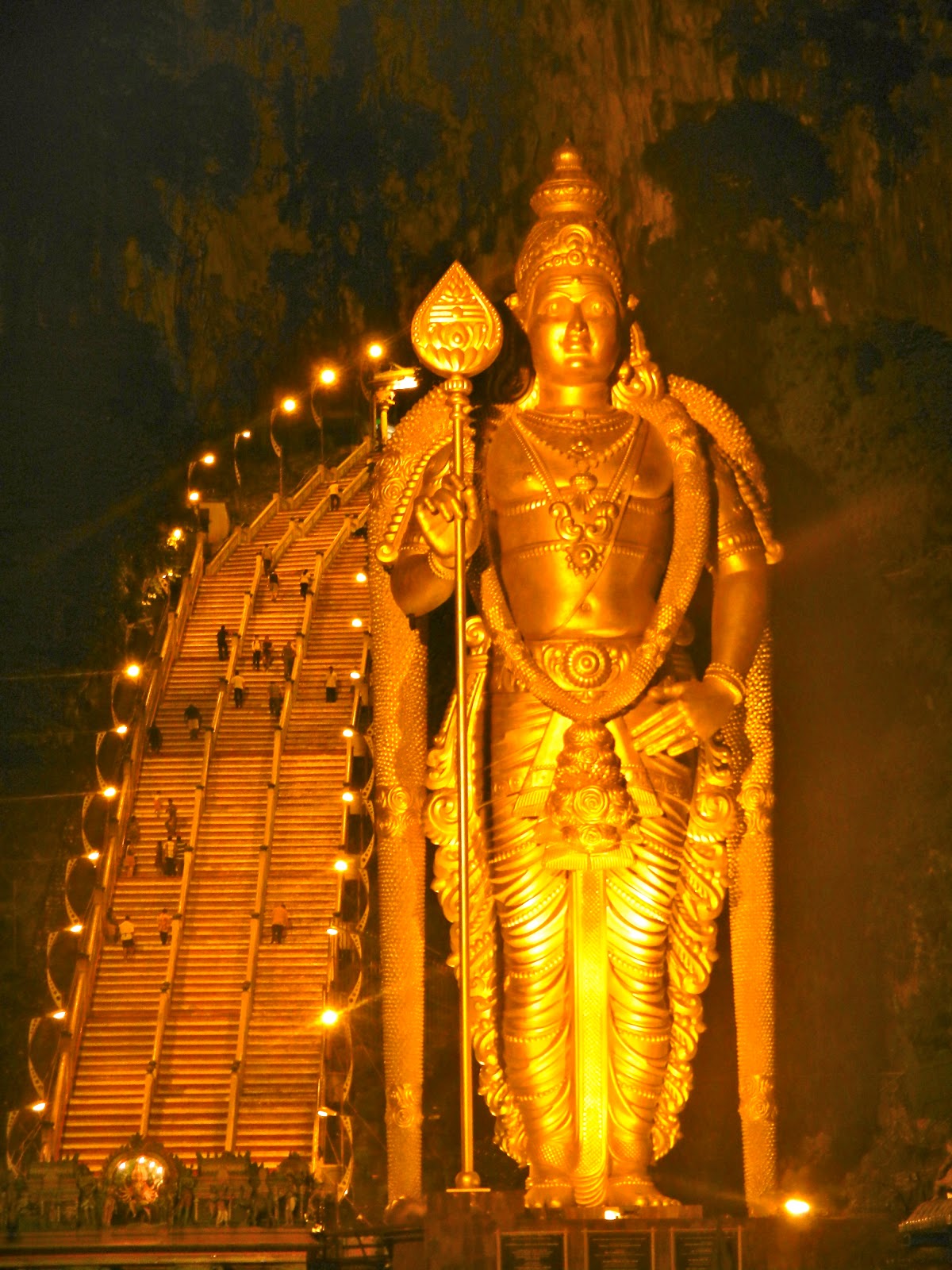
Though the purpose of the I-CAL program is to explore international agriculture, we still made time in our trip to learn about Malaysian culture. One of my favorite culture sights was the Lord Murugan of Batu Caves in Gombak, Malaysia. Here, a giant golden statue is located beside the entrance to religious caves.  Before you get to the caves you must walk up more than 300 steps. Since Asians are traditionally smaller in statue than others, the steps were very small and narrow. Yet all of our group members managed to make it to the top to view the holy caves. 

Muslims make up a majority of the religious sector by nearly 80 percent in Malaysia. Religion plays a vital role in the country's government and social atmosphere. The Lord Murugan of Batu statue was a unique shrine that incorporated religion and architectural skill. Seeing the caves was worth the walk to the top! 

Lord Murugan of Batu Caves stands at an impressive 42.7 m tall. 

Before I walked up the steps to the caves! 

I reached the top! 

Offerings and memorials inside the caves. 

What a sight! 

Flour Mill


Standing on the roof top of the flour mill. 

The shipping port below. 

Bethany M. myself and Shasta Sowers enjoy the view knowing we are safe with our hard helmets.


Once the flour has been packaged and bagged, it is sent to the storage room. This giant concrete structure was filled with flour bags! 

Malaysian Memories

There's nothing like watching the sun rise! 

After watching the sunrise from my room. 

Malaysian Sunset. 

You never know what you may find beyond the sun.